
The Ideal Grooming Frequency for Every Canine Coat Type
How Often Should Dogs Be Groomed? Start With Their Coat
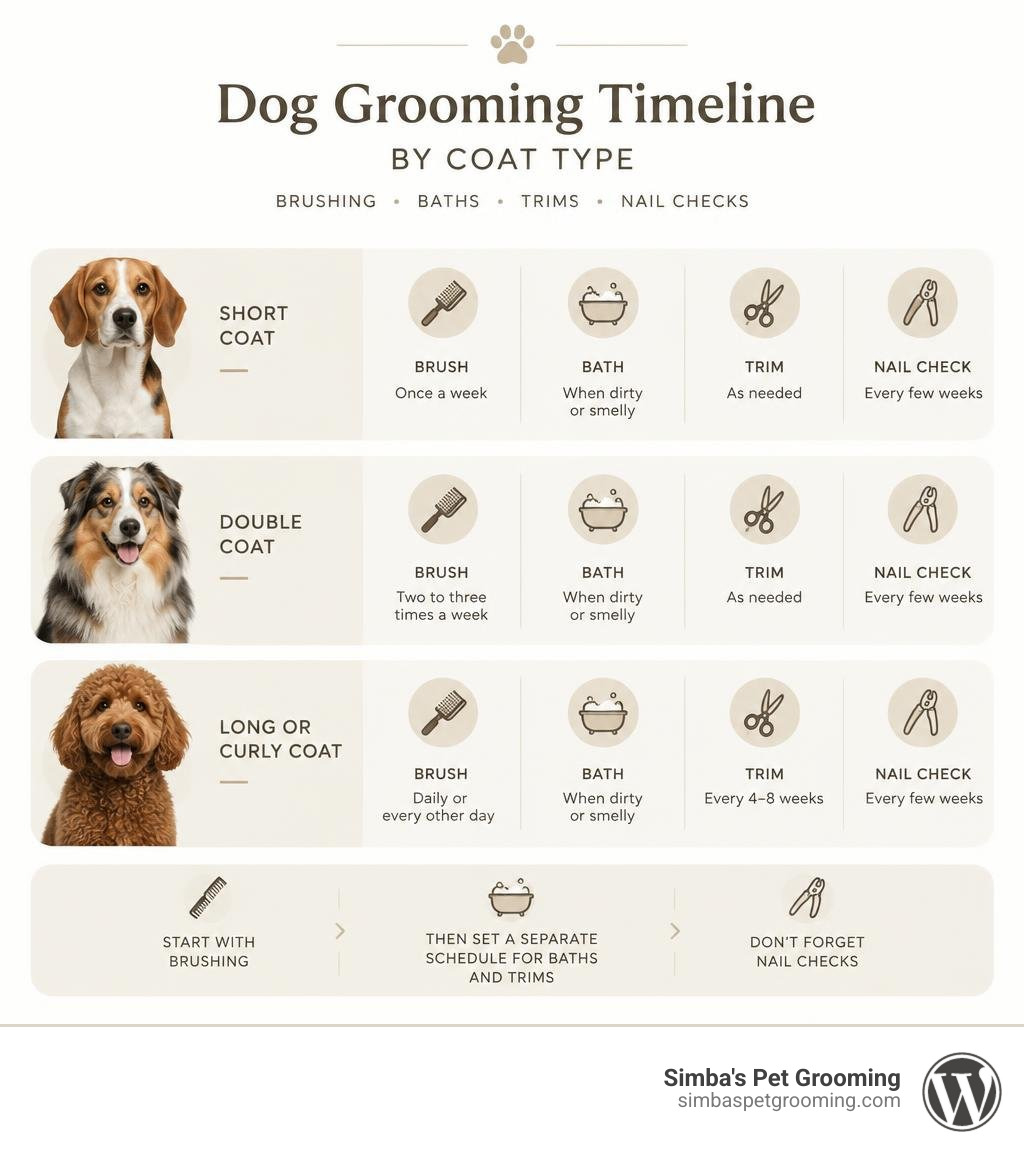
Start with brushing, then set a separate schedule for baths and trims. Brush short-haired dogs about once a week, double-coated dogs two or three times a week, and long or curly-coated dogs daily or every other day. Long and curly coats often need a professional trim every four to eight weeks. Bathe your dog when their coat is dirty or smells, and check their nails every few weeks.
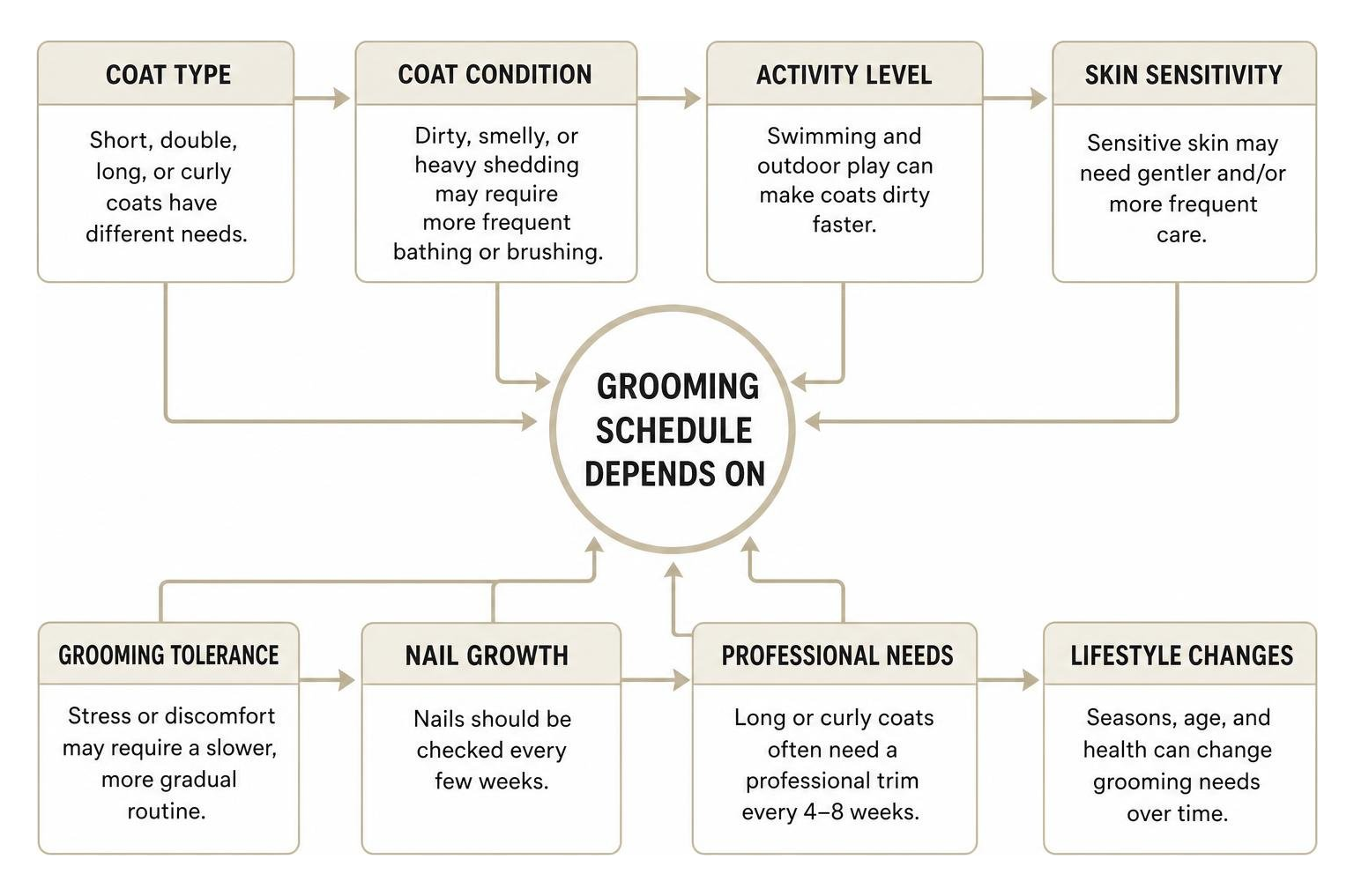
These are starting points, not strict rules. A dog that swims, sheds heavily, has sensitive skin, or finds grooming stressful may need a different routine. The goal is a clean, comfortable coat without making care harder than it needs to be.
Core Factors That Dictate Canine Grooming Schedules
Every pup has unique needs. While a blanket calendar might sound convenient, real-world grooming depends heavily on lifestyle, biology, and daily activity.
Key Factors in Determining How Often Should Dogs Be Groomed
To build a tailored routine, several essential variables must be weighed:
- Coat Texture and Length: Curly, silky, and double coats demand far more hands-on intervention than smooth coats to prevent tangling and compaction.
- Activity Levels and Environment: An active dog hiking dusty trails or splashing in creek beds collects burrs, dirt, and moisture that alter standard bathing needs.
- Seasonal Shifts: During spring and autumn coat blow cycles, shedding surges significantly, requiring brief daily brushing sessions.
- Skin Sensitivity: Dogs prone to allergies or contact dermatitis need pH-balanced cleansers and careful spacing between washes to protect natural barrier lipids.
- Age and Mobility: Senior pets with arthritis benefit from shorter, more frequent appointments, while puppies require gentle, brief introductions to build lasting confidence.
According to standard ASPCA dog grooming guidelines, maintaining a regular schedule for brushing, bathing, and nail care safeguards canine health while catching underlying dermatological concerns early.
Physical Signs Your Dog Needs Immediate Grooming
Rather than waiting for a set calendar date, watch for clear physical indicators that your dog is overdue for hands-on care:
- Nail Clicking: Hearing sharp clicking sounds as your dog walks across hard floors signals overgrown claws that risk postural strain.
- Pelted or Tightly Knotted Fur: Tangles forming behind the ears, in armpits, or across the groin that cannot be separated with a steel comb.
- Persistent Coat Odor: A foul or yeasty smell originating from skin folds, ears, or oily fur.
- Excessive Scratching and Chewing: Constant licking at paws or scratching at flanks due to trapped dander and loose undercoat.
- Visible Ear Debris: Dark wax buildup or redness accompanied by head shaking.
- Scooting or Rear Discomfort: Indicating impacted anal glands or sanitary hygiene needs.
How Often Should Dogs Be Groomed by Coat Type?
Coat genetics dictate daily home care as well as professional salon frequency.

| Coat Type | Home Brushing Cadence | Bathing Interval | Professional Grooming Cycle | Recommended Primary Tools |
|---|---|---|---|---|
| Smooth / Short | 1x per week | Every 4–8 weeks | Every 8–12 weeks (baths & nails) | Rubber curry brush, bristle brush |
| Double Coat | 2–3x per week (daily during blow) | Every 6–8 weeks | Every 8–12 weeks (deshedding) | Undercoat rake, slicker brush |
| Curly / Wool | Daily line brushing | Every 3–4 weeks | Every 4–6 weeks (haircut) | Slicker brush, greyhound steel comb |
| Long / Silky | Daily to every other day | Every 2–4 weeks | Every 4–6 weeks (trim & tidy) | Pin brush, wide-toothed metal comb |
| Wire / Rough | 2–3x per week | Every 6–8 weeks | Every 6–8 weeks (hand-strip/clip) | Stripping knife, slicker brush |
| Hairless | Daily skin wipes | Every 1–2 weeks | As needed for skin & nail care | Soft cotton cloths, pet-safe lotion |
Smooth and Short-Haired Breeds
Short, sleek coats (found on breeds like Boxers, Pointers, and Smooth Dachshunds) are low-maintenance but still shed steady amounts of fine hair.
- Brushing Routine: Use a rubber curry brush in gentle circular motions once a week. This lifts dead hair and massages the skin to distribute natural sebum across the coat.
- Bathing Cadence: Bathe every 4 to 8 weeks unless your dog finds a mud puddle. Over-washing smooth coats strips away their natural protective sheen.
Double-Coated Breeds
Breeds like Siberian Huskies, Golden Retrievers, German Shepherds, and Pomeranians possess a harsh outer guard coat paired with a dense, insulating undercoat.
- Brushing Routine: Brush 2 to 3 times weekly using an undercoat rake to pull out dead hair before it mats against the skin. Increase to daily sessions during seasonal shedding cycles in spring and autumn.
- Salon Treatments: Professional deshedding treatments utilizing high-velocity blowouts release compacted undercoat efficiently.
- Crucial Rule: Never shave a double-coated dog for summer heat. Shaving removes their natural thermal insulation, elevates heatstroke risk, and can cause permanent follicle damage leading to patchy, uneven regrowth.
Curly, Wavy, and Wool Breeds
Poodles, Goldendoodles, Labradoodles, and Bichon Frises have hair that grows continuously rather than shedding out cleanly.
- Brushing Routine: Daily line brushing is essential. Part the hair down to the skin and brush outward with a slicker brush, finishing with a steel greyhound comb to verify no base knots remain.
- Professional Cadence: Schedule professional styling every 4 to 6 weeks. Skipping appointments often leads to tight pelting, where the only humane recourse is a short shave-down.
Long, Silky, Wire, and Hairless Breeds
Specialty coats require dedicated handling techniques:
- Long and Silky Coats: Breeds like Yorkshire Terriers and Maltese need daily attention with a pin brush and detangling spray to maintain flowing locks without breakage.
- Wire Coats: Terriers and Schnauzers benefit from hand-stripping every 6 to 8 weeks to pluck dead hair follicles and preserve wiry water-resistant textures, or regular clipping every 6 to 8 weeks for companion pets.
- Hairless Breeds: Chinese Cresteds and Xoloitzcuintlis bypass standard brushing but require damp sponge wipe-downs, moisturizing balms, and diligent pet-safe sun protection routines.
Universal Hygiene Schedules for Every Dog
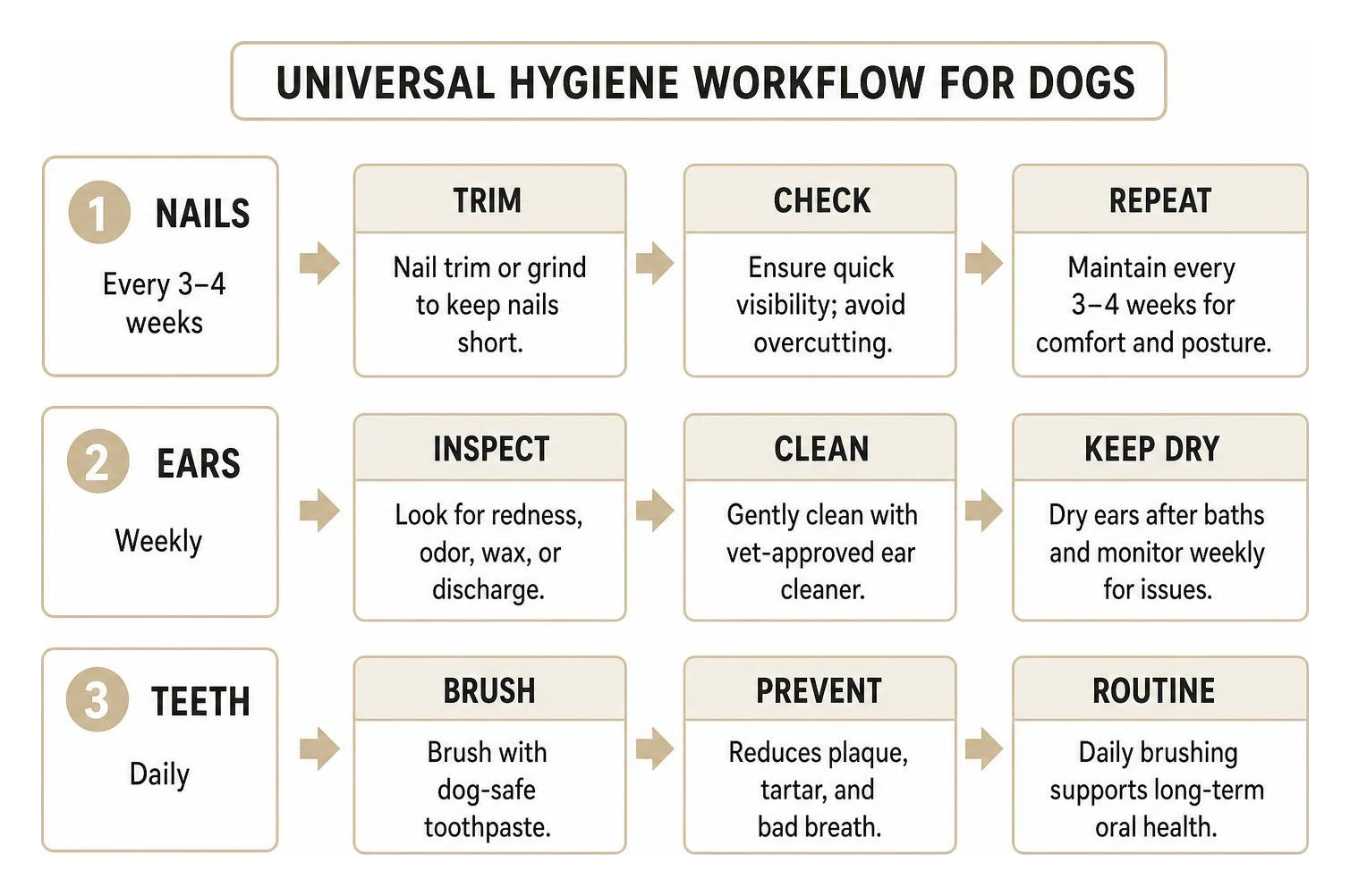
Coat upkeep is only half the equation; routine maintenance of nails, ears, and teeth protects your dog against systemic discomfort and infections.
Bathing and Haircut Timelines
Bathing frequency ranges from every 2 weeks to once every 3 months depending on coat dynamics and outdoor adventures. Always select hypoallergenic, pH-balanced canine cleansers—human shampoos disrupt canine acid mantles and dry out delicate skin.
When your dog’s hygiene requires extra care, our services provide thorough hydro-massage bathing, breed-specific styling, and specialized coat conditioning.
Essential Nail, Ear, and Dental Care Intervals
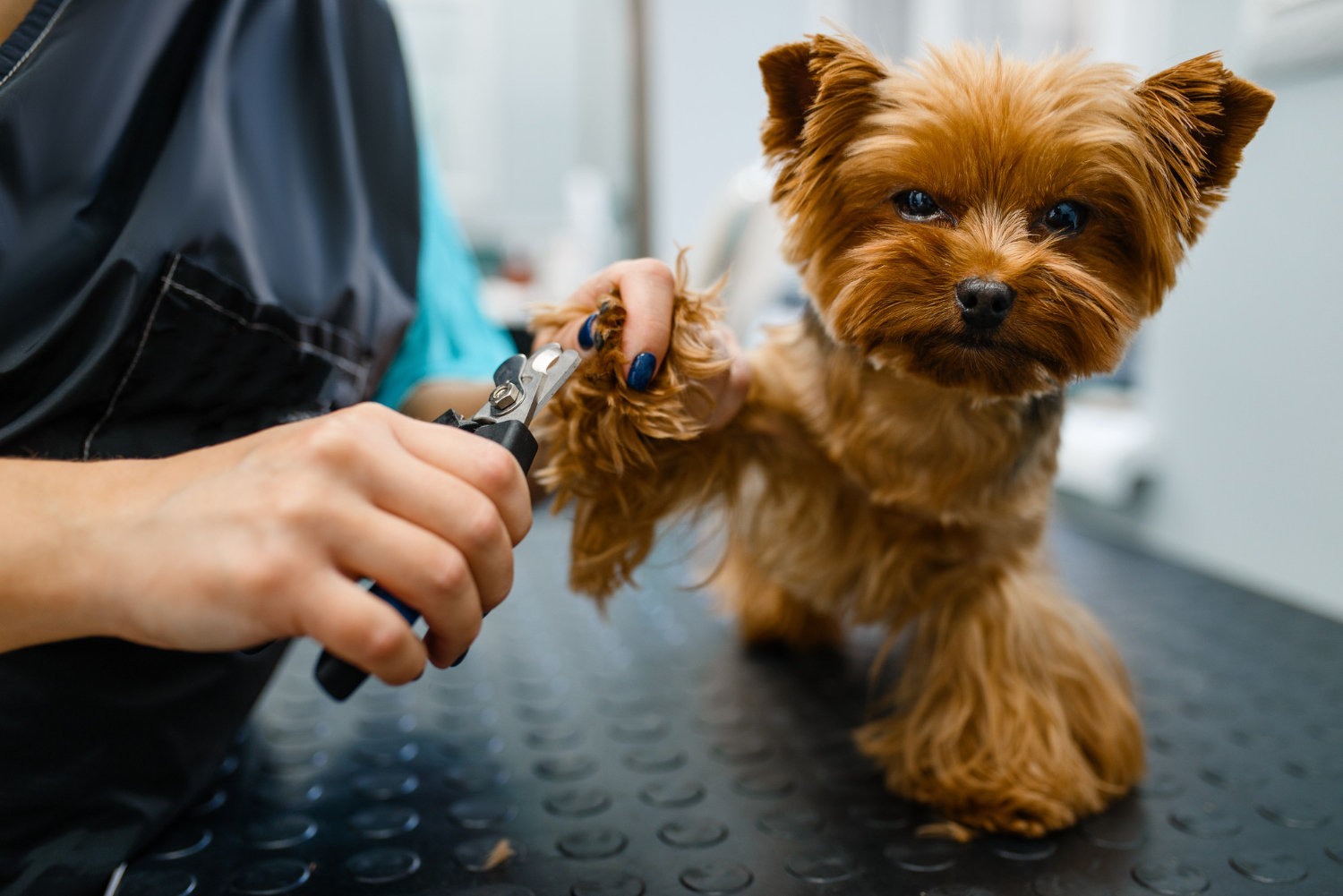
- Nail Trimming (Every 2–4 Weeks): Claws should not extend past the paw pads or click on hard floors. Use sharp scissor-style clippers or a nail grinder, working carefully to avoid cutting the vascular quick inside the nail core.
- Ear Cleaning (Weekly to Monthly): Check ears weekly for odor or dark discharge. Breeds with drop ears (such as Spaniels or Doodles) trap moisture easily and need routine cleansing with dedicated drying solutions.
- Dental Brushing (2–4 Times Weekly): With over 80% of dogs displaying signs of periodontal disease by age three, consistent brushing with enzymatic pet toothpaste prevents plaque from hardening into calculus.
Best Practices for Home Maintenance and Professional Care
A positive partnership between home care and professional salon visits keeps pets comfortable throughout their lives.
Creating a Low-Stress Home Routine
- Keep Sessions Brief: Start with 3 to 5 minutes of handling, rewarding calm behavior with high-value treats.
- Employ Distraction Aids: Use peanut-butter-filled lick mats secured to bathroom tile walls during brushing or paw handling.
- Use the Right Tools: Never yank through mats with wire bristles; use detangling sprays and work gently from the tips down to the skin.
- Desensitize Gradually: Introduce clippers, blowers, and toothbrushes step by step using gentle touch and verbal praise.
When to Schedule Professional Grooming
While home brushing provides essential maintenance, professional care is recommended when:
- Dense undercoat compaction requires high-velocity drying equipment.
- Sanitary trims and precise paw pad clearances are needed.
- External anal gland expression is required for dogs experiencing comfort issues.
- Pets show anxiety, tactile sensitivity, or mobility constraints that benefit from specialized handling equipment.
If you are looking for dedicated care in Pasadena, CA, our team is specially trained to support pets of all temperaments and life stages. We encourage pet parents to complete our new client intake to ensure personalized accommodation from the very first visit. You can also explore our background on our about page, schedule upcoming care through our appointments page, or reach out via our contact page with any questions.
Frequently Asked Questions About Dog Grooming Frequency
How Often Should Dogs Be Groomed During Shedding Season?
During spring and autumn coat blow seasons, double-coated breeds need daily home brushing with slicker brushes and undercoat rakes. Booking a professional deshedding blowout at the onset of seasonal shedding helps clear out dead undercoat and prevents dense matting against the skin.
What are the health risks of under-grooming a dog?
Neglected grooming can lead to painful skin pelting that pinches delicate tissue, cuts off air circulation, and harbors bacterial or fungal infections. Overgrown nails can alter canine skeletal alignment, while uncleaned ears and unbrushed teeth frequently lead to chronic otitis and severe periodontal disease.
Can bathing a dog too often damage their coat?
Yes. Frequent bathing with harsh detergents strips away the natural lipid barrier protecting canine skin. This results in dry flaking, itching, and compensatory sebum overproduction that leaves the coat feeling greasy and irritated.
Conclusion
Finding the right grooming cadence is one of the simplest ways to keep your dog comfortable, active, and healthy year-round. By matching your home routine to your pup’s coat genetics and keeping up with regular nail, ear, and bath intervals, you prevent discomfort before it begins.
If you are in the Pasadena, CA area and need specialized support, Simba’s Pet Grooming is here to help your pet look and feel their absolute best.